One stock ledger
Storefront, POS, buylist, and marketplace listings all draw from the same inventory record. When a card sells in one place, the available quantity is reduced everywhere else instead of waiting for staff to remember a manual update.
Whatnot is the dominant live-selling marketplace for trading cards in North America. Storefront Pro supports Whatnot sellers on the inventory and fulfilment side — your Storefront Pro inventory is the single source of truth, sold items decrement centrally, and post-stream fulfilment flows through your existing order pipeline. Direct API integration is on our roadmap.
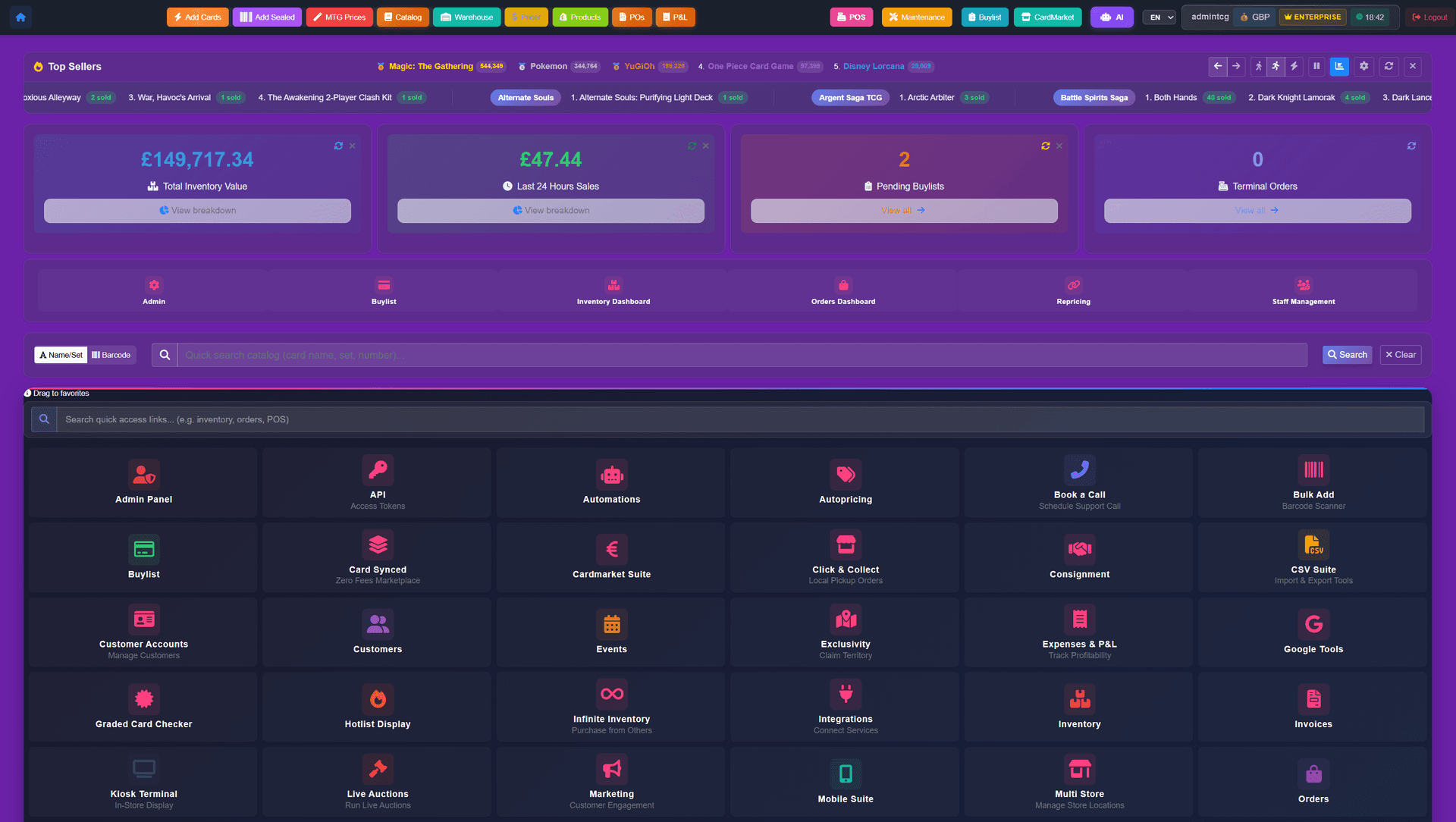
The concrete details of the Storefront Pro ↔ Whatnot integration. No hand-waving — read it before you start, not after.
Concrete features, not marketing bullets.
Marketplace sync is only useful if staff can trust the numbers at the counter. Storefront Pro treats each channel as an output of the same stock ledger, not as a separate spreadsheet to reconcile later.
Storefront, POS, buylist, and marketplace listings all draw from the same inventory record. When a card sells in one place, the available quantity is reduced everywhere else instead of waiting for staff to remember a manual update.
Your own storefront can hold margin while marketplace listings compete more aggressively. Pricing rules can reflect fees, shipping expectations, condition, language, and how quickly you want a particular catalogue to move.
Orders from external channels are pulled into the same fulfilment queue as online and in-store sales. Staff pick, pack, refund, and report from one place instead of switching between seller portals.
API limits, rejected listings, missing SKUs, and price-rule conflicts are visible in the admin dashboard. The integration is designed to make failures obvious, because silent sync failures are how oversells happen.
We'd rather tell you the limits before you start than have you discover them after onboarding.
Every marketplace connector is bundled on both full-platform plans. Storefront Pro is $1,000 USD setup + 2% only on TCG item sales. Enterprise starts from $2,499 USD/month with 0% sales fees, dedicated support, and direct founder access.
Tell us about your store and integrations and we'll help you choose the right package. All published pricing is billed in USD: Storefront Pro is $1,000 USD setup + 2% on TCG item sales, and Enterprise starts from $2,499 USD/month with 0% sales fees. Custom packages are scoped separately.