Opening a card shop
The general playbook: budget, location, licences and software.
Magic is the deepest TCG in the world and the one with the longest-running organised play. Opening a Magic-first store in 2026 is a viable business — but only if you get the publisher programme, the singles pricing, and the event calendar right in the first three months. Here's the playbook.
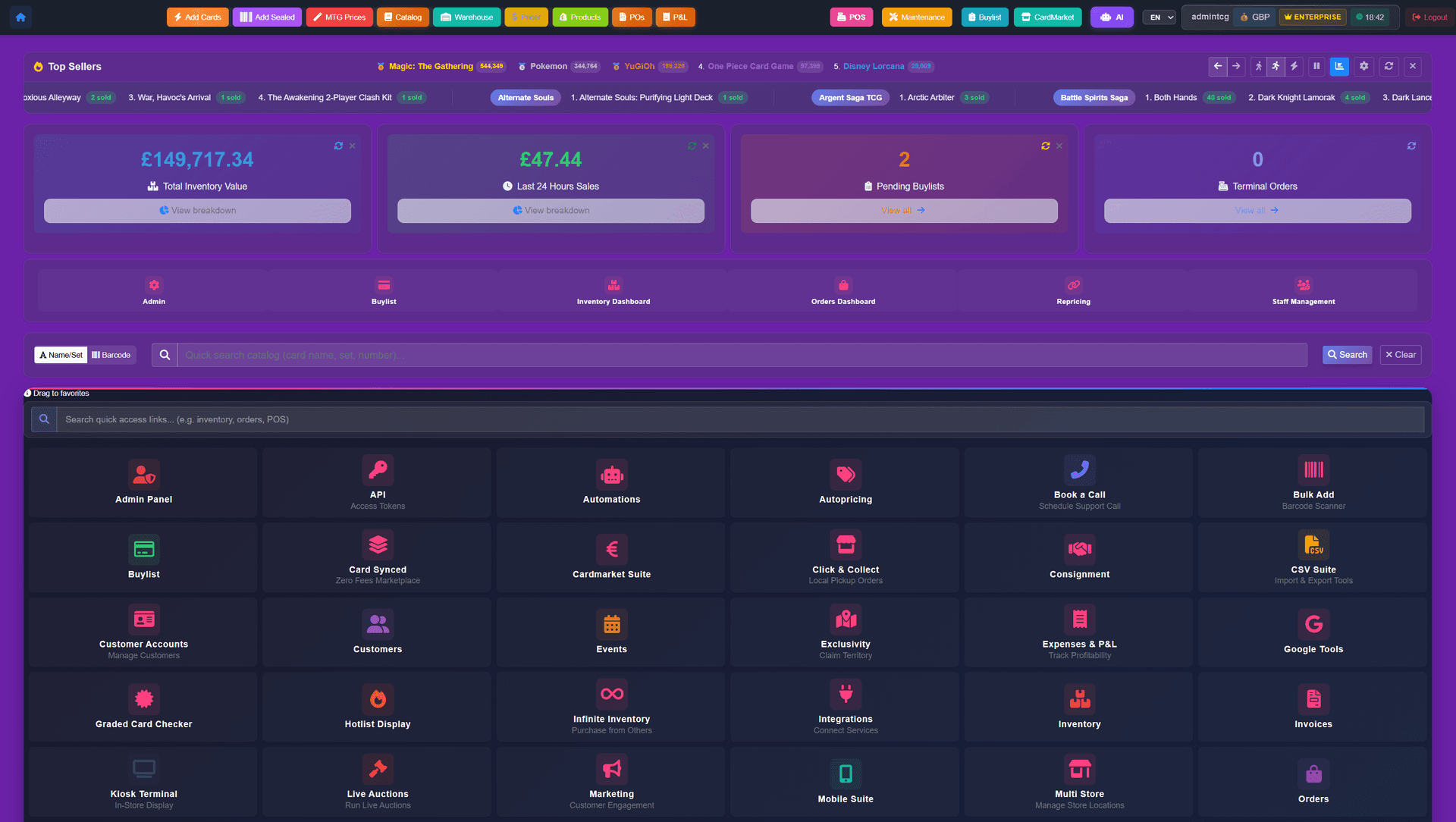
Running a Magic store is its own discipline. The shops that work share a specific set of early decisions.
WPN approval takes weeks. Start the application the moment you have your business registered. Without WPN you have no prerelease access, no FNM promos, and no organised play — which means no Magic community forms around your shop.
Commander is the largest Magic format by player count. Singles for popular Commander archetypes sell faster than Standard staples at most new shops. Stock around 3–5 common archetypes deeply before going wide.
Announce FNM before opening day. Run it every Friday from week one — even with 4 players. Consistency builds the recurring community; gaps kill it.
Prereleases are the highest-margin events of the set cycle. Pre-sell kits, enforce per-customer limits, and plan staffing for a long day. Run the prerelease, buylist the singles opened, and list the chase cards on TCGplayer the same day.
Do not price manually. Do not price against TCGplayer Low (race to the bottom). Autoprice against Market with a 5–10% margin and a $0.25 floor. Exclude reserved-list cards and graded slabs from autopricing.
Publish a buylist (cash and store credit) before opening. Customers with cards to sell are your cheapest source of inventory. Pay 40–60% of market in credit; 25–40% in cash.
Every single you grade and list in-store should hit TCGplayer (and Cardmarket if you're in Europe) the same day. Marketplace orders subsidise the slow weeks of local trade.
FNM attendance trend is the single best predictor of whether your shop is growing or quietly dying. Flat-or-up = healthy. Down two months in a row = fix something now.
TCG Sync ships the MTG catalogue, FNM event tooling, deckbuilder, TCGplayer and CardNexus sync, and buylist in one platform. We train your staff over Zoom, and can book a call whenever you'd like to talk something through. Opening a new shop or selling under about $1.5M a year in TCG? Storefront Pro is usually the right place to start — same software, no monthly fee.
Starting from$2,499USD per month
No setup fee and no sales percentage
Discuss Enterprise$1,000USD one-time setup
+ 2% of TCG singles and sealed sales across POS, Shopify and marketplaces — comics, board games, accessories, drinks, toys and other non-TCG items are excluded
Start with Storefront ProLet’s discuss itScoped around your business
Scope and pricing agreed together
Let’s discuss itEmail us about your store and we'll take it from there.
Related topics, running on the same platform underneath.
The general playbook: budget, location, licences and software.
The platform side: catalogue, deckbuilder, events and buylist.
Formats, prize support, and keeping the room full.
What the Wizards Play Network is and what membership requires.