Opening a card shop
The general launch checklist for a new shop.
Yu-Gi-Oh! is the fastest-rotating major TCG — singles values move week to week, the meta shifts every set, and competitive players will drop several hundred pounds on a new deck overnight. The shops that work stay close to the meta, reprice constantly, and run weekly Locals that matter.
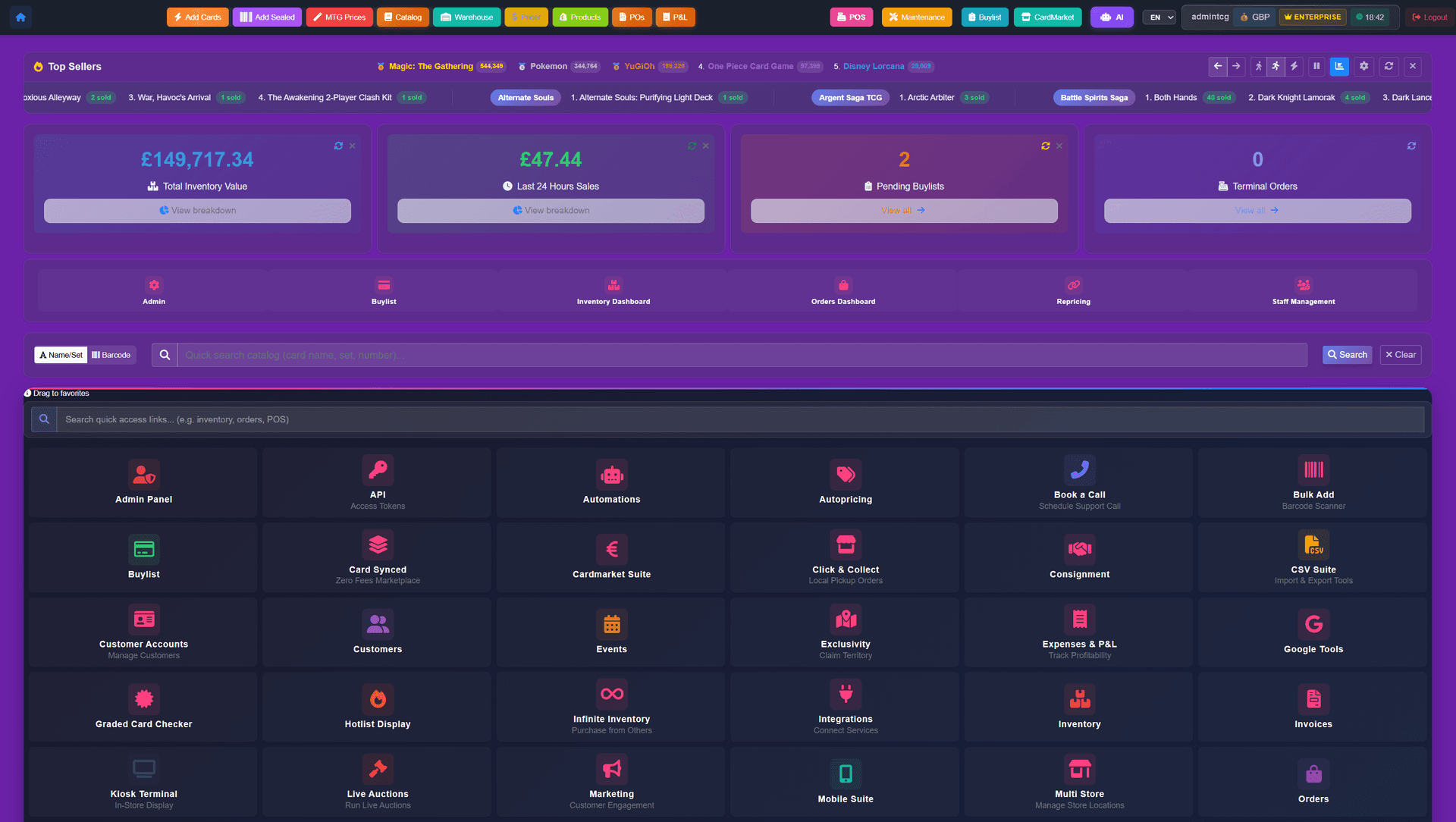
Yu-Gi-Oh rewards operators who stay close to the competitive meta. The decisions that matter on day one are about speed, not depth.
OTS credentials from Konami unlock sanctioned events, promo packs, and tournament support. Apply early — processing times vary by region.
Yu-Gi-Oh singles can swing 30–50% on a single tournament result. Autopricing against TCGplayer market price, run daily, is the floor. Hourly for staples of the current meta.
Locals is the Yu-Gi-Oh equivalent of FNM. Entry, structured rounds, prize support in packs or store credit. Attendance builds the singles demand your shop runs on.
Structure decks and Starter decks onboard new players who then buy singles to upgrade. Don't over-index on boxes for the collector market — Yu-Gi-Oh's collector side is smaller than Pokémon's.
When a new set warps the meta, the previous meta's staples drop fast — and the new meta's key cards spike. Shops that buylist aggressively in the week of a new set release capture the singles inventory that will sell for the next three months.
List singles on TCGplayer and Cardmarket from month one. Yu-Gi-Oh secondary demand splits across both marketplaces more evenly than MTG does.
Some Yu-Gi-Oh! collectors specifically want OCG (Japanese) prints. Stocking a modest OCG singles case differentiates you from generalist shops and attracts collector foot traffic.
A shop that knows which cards are hot this week earns trust fast. Weekly social posts about meta shifts, price moves, and new-set picks turn into singles sales.
TCG Sync ships the Yu-Gi-Oh! catalogue (TCG and OCG), Locals event tooling, aggressive autopricing, and multi-marketplace sync. We train your staff over Zoom, and can book a call whenever you'd like to talk something through. Opening a new shop or selling under about $1.5M a year in TCG? Storefront Pro is usually the right place to start — same software, no monthly fee.
Starting from$2,499USD per month
No setup fee and no sales percentage
Discuss Enterprise$1,000USD one-time setup
+ 2% of TCG singles and sealed sales across POS, Shopify and marketplaces — comics, board games, accessories, drinks, toys and other non-TCG items are excluded
Start with Storefront ProLet’s discuss itScoped around your business
Scope and pricing agreed together
Let’s discuss itEmail us about your store and we'll take it from there.
Related topics, running on the same platform underneath.
The general launch checklist for a new shop.
The storefront side: catalogue, listings, deckbuilder and buylist.
Rarity at the till, Locals check-in, and trade-in intake.
Which benchmark to price against in a volatile market.