Opening a card shop
Budget, location, licences and the software decision.
Pokémon retail is two businesses in one shop: sealed collectors buying booster boxes and tins, and players buying singles for League and tournaments. The shops that work in 2026 serve both — and lean on Pokémon League for recurring footfall.
Pokémon retail rewards preparation. These are the decisions that separate the shops that thrive from the ones that drown in booster-box demand they can't fulfil.
Apply via pokemon.com/retailers. You need a registered business, a physical location, and the commitment to host League regularly. League credentials unlock product allocations, prize support, and promo cards.
Pokémon sealed product is perennially supply-constrained. Negotiate with multiple distributors early, maintain records of weekly orders, and do not run out of the current set. A box shortage costs you collector customers for months.
League is recurring footfall. Kids and families show up for League; they buy singles, boosters, and supplies while they're there. Run it at a consistent time every week — Saturday mornings or Sunday afternoons are standard.
Stock Standard and Expanded singles for tournament players. Carry ex / V / VMAX / full-art singles for collectors. Keep a case of graded chase cards (Charizards, Pikachus, vintage) for the collector foot traffic.
Pokémon condition grading is strict — collectors will refuse LP where they'd accept it on Magic. Publish a buylist with clear NM-only / played-grade splits. Lean on store credit to keep margins intact.
TCGplayer is the dominant secondary marketplace for Pokémon in North America. List every single you grade from month one. International shops also list on Cardmarket; Japanese-focused shops also list on Yahoo Auctions.
Pokémon prereleases are lower-velocity than MTG but still profitable. Book the event as soon as the set is announced, enforce per-player limits, and run buylist on the singles opened during the event.
Pokémon customers span kids through adult collectors. Your physical layout, event structure, and staff tone all have to work for both ends of that range. Many shops run separate kid-focused and adult-collector nights.
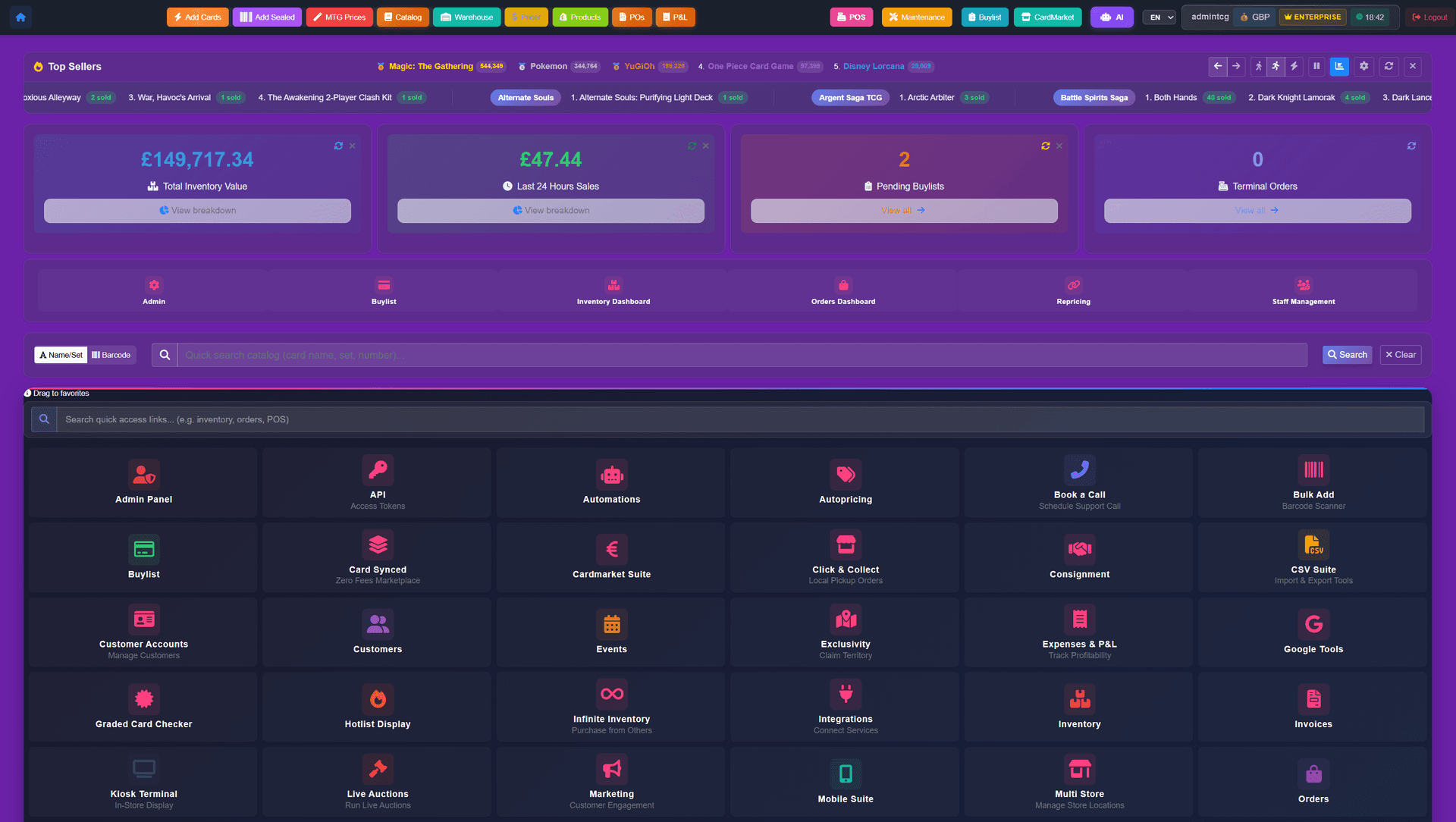
TCG Sync ships the Pokémon catalogue, League event tooling, graded-card handling, TCGplayer and CardNexus sync, and buylist. We train your staff over Zoom, and can book a call whenever you'd like to talk something through. Opening a new shop or selling under about $1.5M a year in TCG? Storefront Pro is usually the right place to start — same software, no monthly fee.
Starting from$2,499USD per month
No setup fee and no sales percentage
Discuss Enterprise$1,000USD one-time setup
+ 2% of TCG singles and sealed sales across POS, Shopify and marketplaces — comics, board games, accessories, drinks, toys and other non-TCG items are excluded
Start with Storefront ProLet’s discuss itScoped around your business
Scope and pricing agreed together
Let’s discuss itEmail us about your store and we'll take it from there.
Related topics, running on the same platform underneath.
Budget, location, licences and the software decision.
A comparison worth making before choosing a first game.
The storefront side: catalogues, pre-orders and online buylist.
Drop-day limits, graded slabs, and trade-ins at the counter.